What if the single smartest thing a wallet could do was not hold your keys, but explain exactly what a transaction will do before you sign it? For DeFi power users—traders, LPs, builders, and compliance-aware teams operating in the US—transaction simulation inside a multi‑chain wallet is an underappreciated defensive layer. It changes signing from an act of faith into an instrumented decision: you see estimated balance deltas, fees, and risk flags before consent.
This essay unpacks how transaction simulation works in practice, why it matters across 90+ EVM chains, where the approach breaks down, and how to weigh trade‑offs versus the familiar alternatives (MetaMask, Trust Wallet, Coinbase Wallet). I’ll also point to concrete heuristics you can reuse when choosing a wallet or architecting operational controls for an institutional wallet stack.
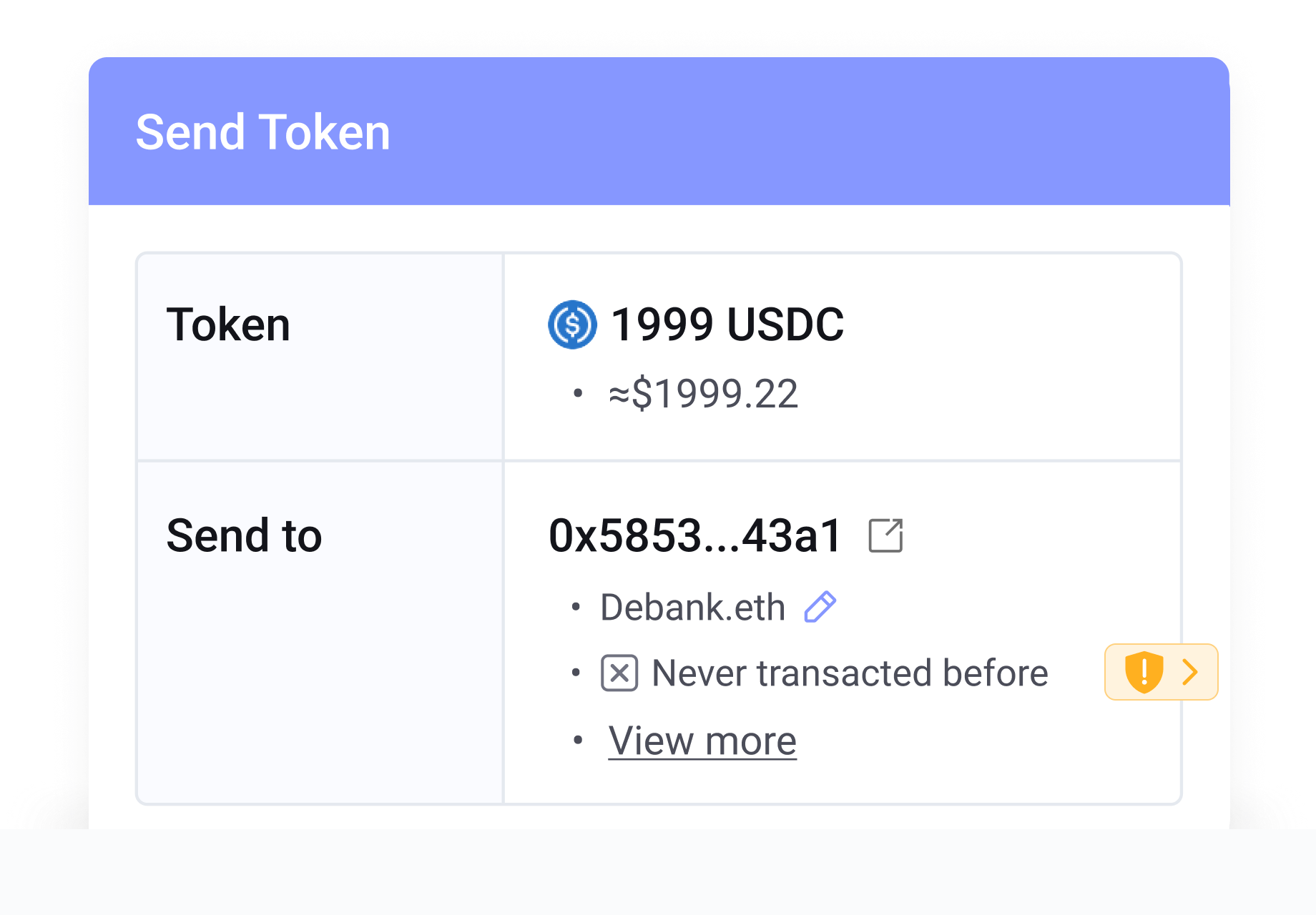
How transaction simulation actually works (mechanism first)
At root, simulation replays the intended transaction against a local or remote EVM node in a read‑only mode. Instead of broadcasting a signed transaction, the wallet constructs the exact call data, gas limits, and value transfer, then asks a node or a local emulator to execute it on the current state. The result returns predicted token transfers, contract state changes, and gas consumption — all without touching the blockchain state.
Two implementation patterns matter: client‑side simulation and server‑assisted simulation. Client‑side simulation (local RPC or a WebAssembly VM) minimizes trust but increases CPU and memory costs on the client. Server‑assisted simulation offloads compute to a node provider, which is faster and cheaper for users but introduces a trust boundary: you must trust the simulator’s node to reflect accurate chain state and not suppress malicious indicators. A well‑designed wallet provides options or transparently signs simulations so audits are possible.
Why simulation matters across many chains
Multi‑chain behavior amplifies two practical risks. First, cross‑chain interactions and liquidity bridges can mask where tokens end up; second, unfamiliar chains can have different gas tokens and fee mechanics, increasing the chance of mistakes. A gas top‑up feature that helps you move ETH or BNB to a previously empty chain reduces friction, but it doesn’t prevent a malicious approval or an exploit in the dApp you’re using. Simulation addresses visible outcomes: will this approval change your balance? Will a swap leave dust? How much gas will be consumed?
For U.S. users, where regulatory and tax attention is rising, having an auditable pre‑sign record of balance changes can be useful operationally: it supports incident triage and can feed internal compliance logs when institutions interact with dApps via multi‑sig or custody partners (Gnosis Safe, Fireblocks, Amber, Cobo). Wallets that integrate simulation into both extension and mobile clients close an important workflow gap for teams juggling trades across chains.
Rabby Wallet as a worked example and comparative frame
Rabby, developed by DeBank, integrates transaction simulation, pre‑transaction risk scanning, approval revocation, automatic network switching, and hardware wallet support. These features create a coherent user experience for high‑activity DeFi users who move across chains and dApps. If you want to evaluate it yourself, see the project page for details on integrations and platforms: rabby wallet.
Compared to MetaMask (the reference wallet), Rabby emphasizes active prevention: it simulates transactions to reduce blind signing and automatically switches networks to the dApp you visit. Compared to Trust Wallet and Coinbase Wallet, which prioritize mobile simplicity and fiat on‑ramps, Rabby trades off some retail convenience (no built‑in fiat on‑ramp, no native staking UI) for richer pre‑transaction telemetry and enterprise connectivity.
Where the approach breaks down — limitations and boundary conditions
Simulation finds many problems, but not all. It cannot predict off‑chain events (an oracle update arriving between simulation and inclusion), or detect a reentrancy exploit that depends on a specific mempool ordering attack once the transaction enters a congested network. Server‑assisted simulators can be fed stale or manipulated state by a compromised node provider. Open‑source code reduces but does not eliminate risk: a public repo is only useful if independent audits actually exercise the code paths that parse and present simulation results.
Past incidents illustrate the limits. Rabby’s history includes a 2022 exploit of a smart contract associated with Rabby Swap; the team froze the contract and compensated users, showing that even simulation and risk scanning are not foolproof against contract‑level vulnerabilities. That episode underlines the distinction between wallet‑level defenses (reduce user error and approvals) and contract security (the dApp code itself). Both must be strong.
Trade-offs: security, UX, and operational complexity
Security-first wallets add decision friction. Presenting detailed balance deltas and risk flags helps expert users, but can overwhelm casual users and lead to prompt fatigue. Automatic network switching reduces user mistakes but introduces subtle privacy and security considerations: a wallet that switches networks quietly must still make the change visible so the user recognizes where gas will be spent.
Institutional use amplifies tradeoffs. Multi‑sig and custody integrations (Gnosis Safe, Fireblocks) improve key management but introduce coordination costs and latency. If your operations model values speed (high‑frequency arbitrage), the additional simulation latency or multi‑sig approval steps can be a real cost. Conversely, for treasury, OTC, or high‑value DeFi activity, the added latency is an appropriate price for traceability and risk reduction.
Decision heuristics for DeFi power users
Here are practical rules you can reuse when choosing and configuring a multi‑chain wallet:
- Prioritize simulation when approving token allowances. If the wallet shows precise balance deltas for approvals and swaps, treat that as a strong signal; if not, add a manual check via a separate simulator before you sign.
- Prefer hardware‑backed signing for any on‑chain approvals above your risk threshold. Hardware plus pre‑transaction simulation stacks orthogonal defenses.
- For institutional flows, require server‑side logging of simulation outputs and signed receipts to create an audit trail that can be reconciled with custody partners.
- Expect a layered defense: simulation reduces blind signing, revocation tools reduce exposure, and contract audits reduce systemic risk; none alone removes the need for operational vigilance.
What to watch next — conditional scenarios and signals
Two conditional scenarios matter for the near term. First, if more wallets standardize deterministically verifiable simulations (signed simulation receipts that can be audited against a public node), we should see a measurable reduction in blind‑signing incidents. Evidence to monitor: adoption of signed simulation standards and tooling that replays signed simulations against archive nodes. Second, if node providers consolidate and begin offering bundled simulation services, centralization risks could emerge; watch for wallets offering opt‑in to run local simulation engines to mitigate that centralization.
Finally, regulatory signals in the U.S. (clarity on custody vs. non‑custodial responsibilities, or guidance about audit trails) could push enterprise users toward wallets that provide auditable simulation logs and multi‑sig integrations. That would reward wallets that already integrate with custody partners and provide exportable pre‑transaction records.
FAQ
Does transaction simulation prevent all scams?
No. Simulation can reveal unexpected token movements, approvals, and fee estimates, which reduces blind signing, but it cannot prevent protocol bugs, oracle manipulations, or front‑running that relies on mempool ordering. Treat simulation as one layer among many.
How reliable are the simulation results across different chains?
Reliability depends on the simulator’s source of chain state and how accurately it models gas and EVM semantics for that chain. For mainstream EVM chains (Ethereum mainnet, Arbitrum, Optimism, Polygon), simulators are mature. For niche or new chains, expect higher divergence and validate with a small test transaction when possible.
Should institutional teams trust server‑side simulations?
Server‑side simulation is practical but creates a trust dependency. Institutions should require verifiable logs, periodic independent audits of the simulation service, and an option to run local simulation in critical flows.
Is automatic network switching safe?
It improves UX by preventing failed transactions due to being on the wrong chain, but the wallet must make network changes explicit and display the gas token and fees. Silent switching without clear UI indicators is a usability and security risk.

Leave a Reply